NFTs in marketing
9. November 2022
The NFT market and non-fungible tokens (NFTs) are gaining momentum, not least due to high-profile sales such as Jack Dorsey’s NFT tweet, which sold for 2.9 million US dollars, or the sale of the Beeple NFT for 69 million US dollars. As a result, NFTs are increasingly being discussed in companies as a cutting-edge topic in online marketing. NFT marketing opens up new options for interacting with individual target groups and customers. Our full-service agency team has explored the trend and provides you with a concise overview of how NFTs can be used in marketing.
What are NFTs?
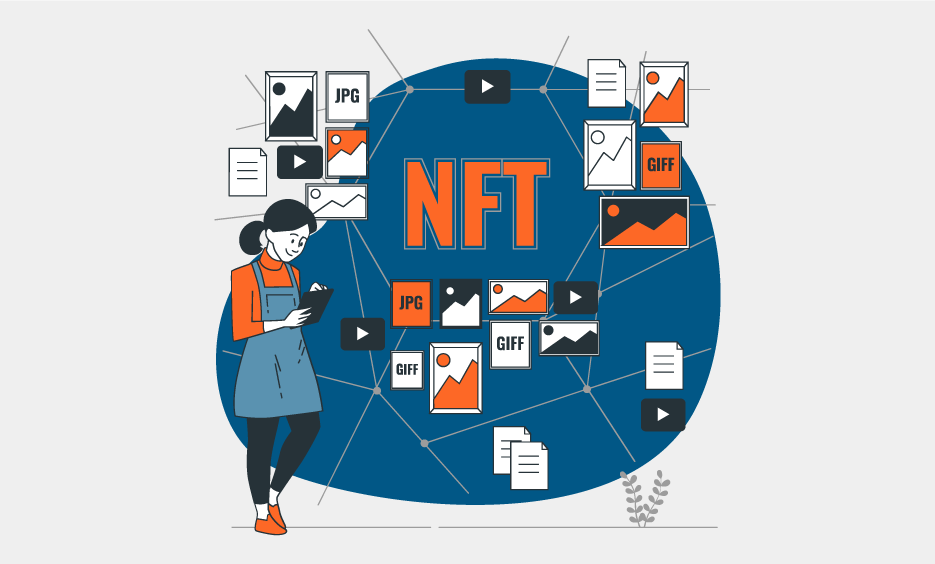
The abbreviation NFT stands for non-fungible tokens, which are unique digital tokens that cannot be exchanged or divided and define the rights of use for digital or physical assets.
The use of NFTs protects digital assets from being copied or shared and allows them to be purchased. In most cases, when purchasing on nftmarket, the buyer receives a reference, such as a URL, that leads to the digital content, but does not provide the actual online file.
NFTs are based on a so-called blockchain, which uses the same technology as cryptocurrencies. The reference is stored with a fixed verification number within a blockchain. Unlike cryptocurrencies, however, NFTs are unique, non-exchangeable, and one-of-a-kind. Cryptocurrencies, on the other hand, offer the option of purchasing shares.
What is NFT minting?
The term “minting” refers to the creation of online artworks. An author can convert a digital file into a crypto collectible and thus mint and sell it. Once stored on the blockchain, the digital object can no longer be converted or deleted.
Why is demand for NFTs increasing?
In addition to the digital scarcity of assets in Web3, individual usage rights and the emotions associated with them also play a key role in NFTs.
It's about the origin of the digital collector's item and the story behind it, which, thanks to the digital age, can now be purchased in dematerialized form on the Internet.
Non-fungible tokens can be used wherever individual objects in PC games, art, music, and much more are assigned an asset value and made tamper-proof.
In this context, it may seem that NFTs are completely new, but blockchain-based technology dates back to 2012.
Not only investors and artists have discovered non-fungible tokens, but more and more companies are also turning to NFT marketing.
How can NFTs be used in marketing?
- Branding: Companies use NFTs as part of their communication and corporate branding. In this context, customers, fans, and followers can be rewarded with NFTs through online marketing efforts. Create a dedicated community where discounts, shipping, or digital products are linked to non-fungible tokens with value. This approach helps increase your target audience’s attention, build long-term customer loyalty, and strengthen your overall branding.
- Audience expansion: A specific customer group is particularly responsive to digital collectibles and the associated NFT marketing. In countries like the USA, around 25% of Generation Y (born in the early 1980s to the late 1990s) already invest in non-fungible tokens.
- Social Media & E-Commerce: Instagram’s parent company Meta announced in 2022 that it would integrate NFTs on Instagram and provide the Digital Collectibles feature. This enables creators and artists to make use of NFTs. So far, a selected group of digital creators has been allowed to mint and sell NFTs directly from the social media platform. In the field of e-commerce, the first non-fungible token in Germany was introduced by the Händlerbund in 2021.
- Metaverse: In the so-called metaverse (a digital space combining virtual, augmented, and physical realities), companies can showcase new products and secure usage rights through non-fungible tokens. Customers can also be offered unique digital goods via NFTs through avatars.
In our follow-up blog post, you will find all the important information you need to know about NFTs on Facebook and Instagram.
Our blog
Latest news
With our blog, you are always close to our work, our current projects and the latest trends and developments in web and print.




Any questions?