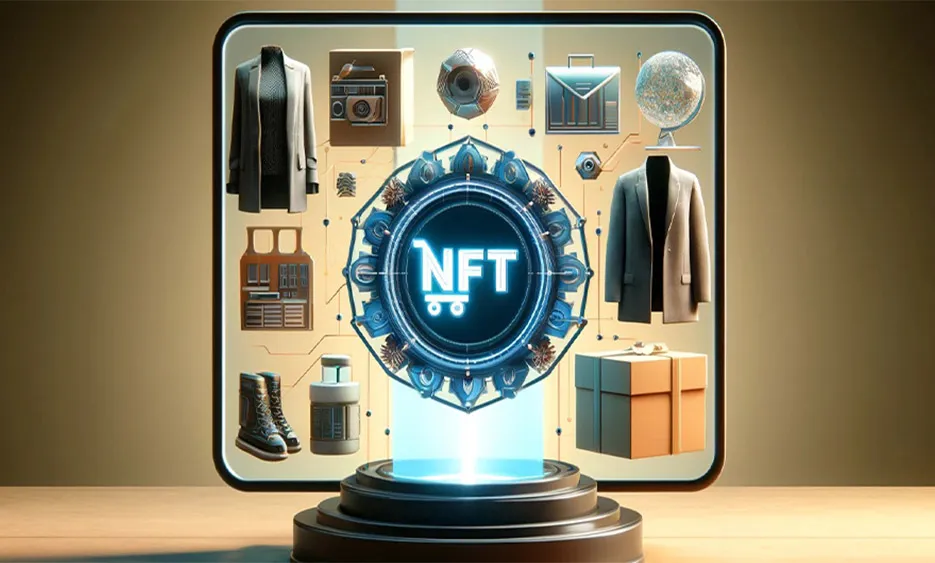
NFTs in E-Commerce: A Guide
2. October 2024
NFTs (Non-Fungible Tokens) have increasingly come into focus in recent years. They not only offer new opportunities in the art world but are also gaining importance in e-commerce. This technology enables companies to offer innovative products, strengthen customer loyalty, and open up new revenue streams.
In this guide, we explore the role of NFTs in e-commerce and highlight additional areas of application to provide a comprehensive overview of this versatile technology.
What are NFTs?
NFTs are unique digital assets stored on the blockchain. Unlike traditional cryptocurrencies, they cannot be exchanged with one another, as each token has individual characteristics.
“Their uniqueness makes NFTs particularly valuable, as they can clearly assign digital and physical goods to a specific owner. These characteristics make NFTs interesting not only for the art market, but also for e-commerce,” says Mirco Recksiek, co-founder and expert at Bitcoin2Go.
A key advantage of NFTs is that they clearly define rights and ownership. NFTs verify both the ownership and the origin of a digital or physical asset through the blockchain. This enables artists and companies to protect their rights and monetize their products.
NFTs also create new paths for a sustainable creative economy by enabling artists and companies to securely market their digital content while also licensing it. Thanks to the transparency of the blockchain, tamper-resistance is ensured, which provides significant added value, especially in industries such as art, music, and digital commerce.
NFTs in e-commerce: opportunities and potential
The possible applications of NFTs in e-commerce are diverse and offer numerous opportunities to stand out from the competition. From customer retention and product development to exclusive offers in online marketing, a wide range of innovative approaches is emerging.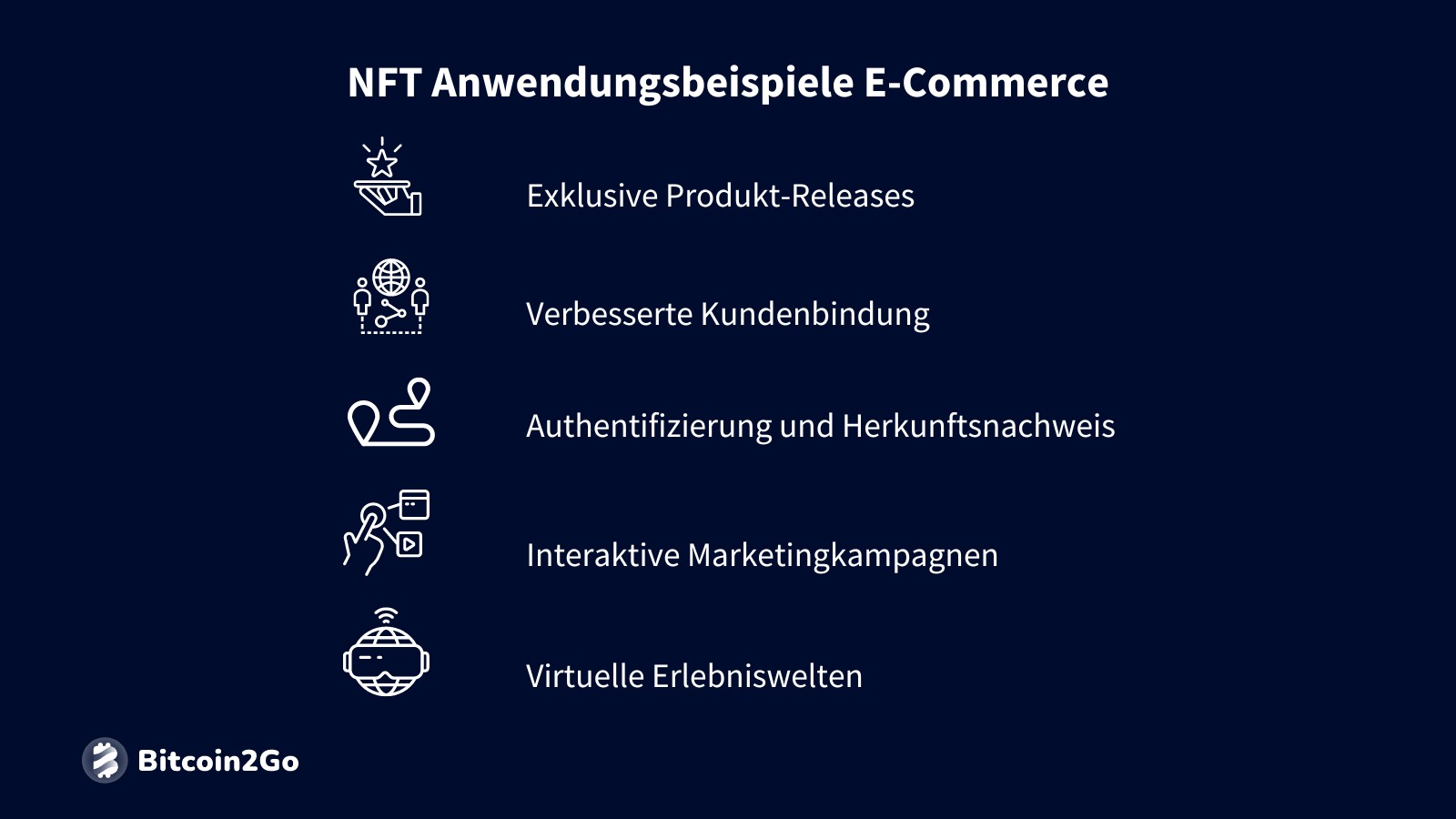
Exclusive product releases and editions
NFTs give companies the opportunity to sell exclusive and limited digital products. This can increase customer interest and excitement, as they feel they are acquiring something unique and scarce. Limited editions of digital goods or special versions of physical products certified through NFTs can become a valuable sales tool.
Customer loyalty through digital collectibles
Innovative companies are exploring the wide range of NFT applications and their versatile uses. They use NFTs both for exclusive customer experiences and to tap into new sources of revenue. They also integrate NFTs into loyalty programs to reward customers with digital collectibles.
Authentication and proof of origin
Especially for high-quality or limited products, authentication plays a crucial role. NFTs provide a tamper-proof way to verify the origin and authenticity of a product. This is particularly relevant for companies in the luxury segment that want to protect their customers from counterfeits.
Interactive marketing campaigns
Companies can also use NFTs for interactive marketing campaigns. For example, NFTs could be used as rewards in contests or offered as part of a virtual experience that strengthens customer loyalty to the brand. This form of customer interaction provides innovative ways to enhance brand awareness.
Virtual worlds and the metaverse
With the development of the metaverse, companies gain further opportunities to strengthen their brand through NFTs. Brands can create virtual worlds where customers, by owning specific NFTs, gain exclusive experiences and access to special areas. This could range from virtual showrooms to interactive experiences where NFTs serve as tickets.
General examples of applications for NFTs
In addition to e-commerce, there are numerous other areas in which NFTs are used. These examples illustrate the versatility of this still-new technology.

Digital art
The art market has discovered NFTs as a new medium for selling and trading digital artworks, allowing artists to sell their works as NFTs while ensuring the authenticity and uniqueness of their creations. The most famous example of this is the sale of a digital artwork by Beeple for 69 million dollars. NFTs not only provide artists with a new source of income but also allow collectors to acquire unique digital art.
Gaming and In-Game-Assets
In the gaming sector, NFTs have introduced a new form of digital ownership. Players can acquire and trade unique in-game items, such as rare weapons or collectibles, as NFTs. These items can be used and traded across platforms, making the gaming experience even more valuable.
Music and Media
In the music and media industry, artists and producers are increasingly turning to NFTs. Musicians can sell limited editions of their songs as NFTs or offer their fans exclusive rights to certain content. This direct connection between artists and fans creates new revenue streams and strengthens fan loyalty.
Real estate and virtual land
NFTs also play a role in the real estate sector, especially in virtual worlds like the metaverse. Here, users can buy and sell digital land. But even in the real world, NFTs could be used in the future to manage property ownership records or securely map contracts on the blockchain.
Future prospects for NFTs in e-commerce
Die Integration von NFTs in den E-Commerce steckt noch in den Anfängen, doch die Zukunft sieht vielversprechend aus. Marken könnten NFTs vermehrt nutzen, um ihren Kunden einzigartige und personalisierte Produkte anzubieten, um so die Markenbindung zu fördern.
With the ongoing development of technologies such as the metaverse, NFTs could play a central role in virtual interactions between companies and their customers. The ability to offer exclusive digital experiences and products will further expand the potential of NFTs in commerce.
Challenges and points of criticism
Despite all the opportunities, as with any new technology, there are also challenges associated with NFTs:
- Umweltauswirkungen:
Viele Blockchains, die NFTs hosten, haben einen hohen Energieverbrauch, was immer wieder zu Kritik führt. Einige Projekte arbeiten jedoch bereits an nachhaltigeren Lösungen, um den Energieverbrauch zu senken.
- Rechtliche Unsicherheiten:
Da die Regulierung von NFTs noch in den Kinderschuhen steckt, gibt es Unsicherheiten darüber, welche Rechte ein NFT-Besitzer tatsächlich erwirbt. Dies betrifft insbesondere Urheberrechte und Nutzungsrechte.
- Marktsättigung:
Durch den Hype um NFTs gibt es inzwischen eine Flut von neuen Projekten, was zu einer Überbewertung mancher NFTs führen kann. Unternehmen sollten daher vorsichtig sein, nicht nur kurzfristig von der Begeisterung zu profitieren, sondern langfristige Strategien zu entwickeln.
Conclusion on the topic of NFTs
NFTs offer e-commerce companies an exciting opportunity to offer exclusive products, enabling them to strengthen customer loyalty while implementing innovative marketing strategies. Furthermore, their versatility makes them a valuable technology not only in retail, but also in areas such as art, gaming, and real estate. Companies that embrace NFTs early on have the chance to establish themselves as pioneers in a growing market.
Our blog
Latest news
With our blog, you are always close to our work, our current projects and the latest trends and developments in web and print.




Any questions?