Claude Design: Disruptive Web Design Powered by Artificial Intelligence
20. April 2026
Claude Design shows you how to use artificial intelligence to create websites, designs, and prototypes in hours instead of weeks…
Overview
- You use Claude Design to quickly create websites and designs using AI and make your workflow more efficient.
- You’ll learn how to achieve professional results using clear prompts, design systems, and iterations
- You recognize the potential of AI in web design and secure a clear competitive advantage early on.
Claude Design is currently transforming the way you develop websites. In the past, companies needed designers, developers, and several weeks of time. Today, a clear idea and a precise prompt are often enough. This is exactly where Claude Design comes in, combining artificial intelligence, design systems, and visual generation into a single workflow.
You may be wondering whether such tools truly deliver professional results. At the same time, you want to know whether they can be used to implement real projects or only create simple mockups. This article answers exactly these questions.
You will learn how Claude Design works, what advantages it offers, and how you can use it in practice. You will also discover who the tool is truly worthwhile for and where its limitations lie. This allows you to better assess whether this technology sustainably improves your workflow.
What is Claude Design?
Claude Design is an AI-powered design tool from Anthropic. It enables you to create and refine visual projects directly through language.
You simply describe what you need. Then the AI creates initial drafts for:
• Websites
• landing pages
• presentations
• prototypes
• marketing materials
The key difference lies in the workflow. You no longer work in traditional tools such as Figma or Adobe XD. Instead, you control the entire process through language and feedback. The AI uses a powerful model like Claude Opus 4.7 to implement designs visually and functionally.
Why Claude Design Matters
Design was long a bottleneck in marketing and in product development. Companies had to plan processes, coordinate resources, and carry out alignments. This led to time losses and high costs.
Claude Design transforms exactly this process.
You can immediately visualize ideas. You also test multiple variants at the same time and make decisions faster. This not only accelerates execution but also your entire strategy.
Especially in online marketing, this creates a clear advantage. You react faster to trends, test more campaigns, and optimize designs based on data.
A typical example clearly shows the difference. A company needs a landing page for a campaign. In the past, this took several days. Today, a first draft is created within minutes.
How Claude Design Works
Claude Design follows a clearly structured process that feels intuitive.
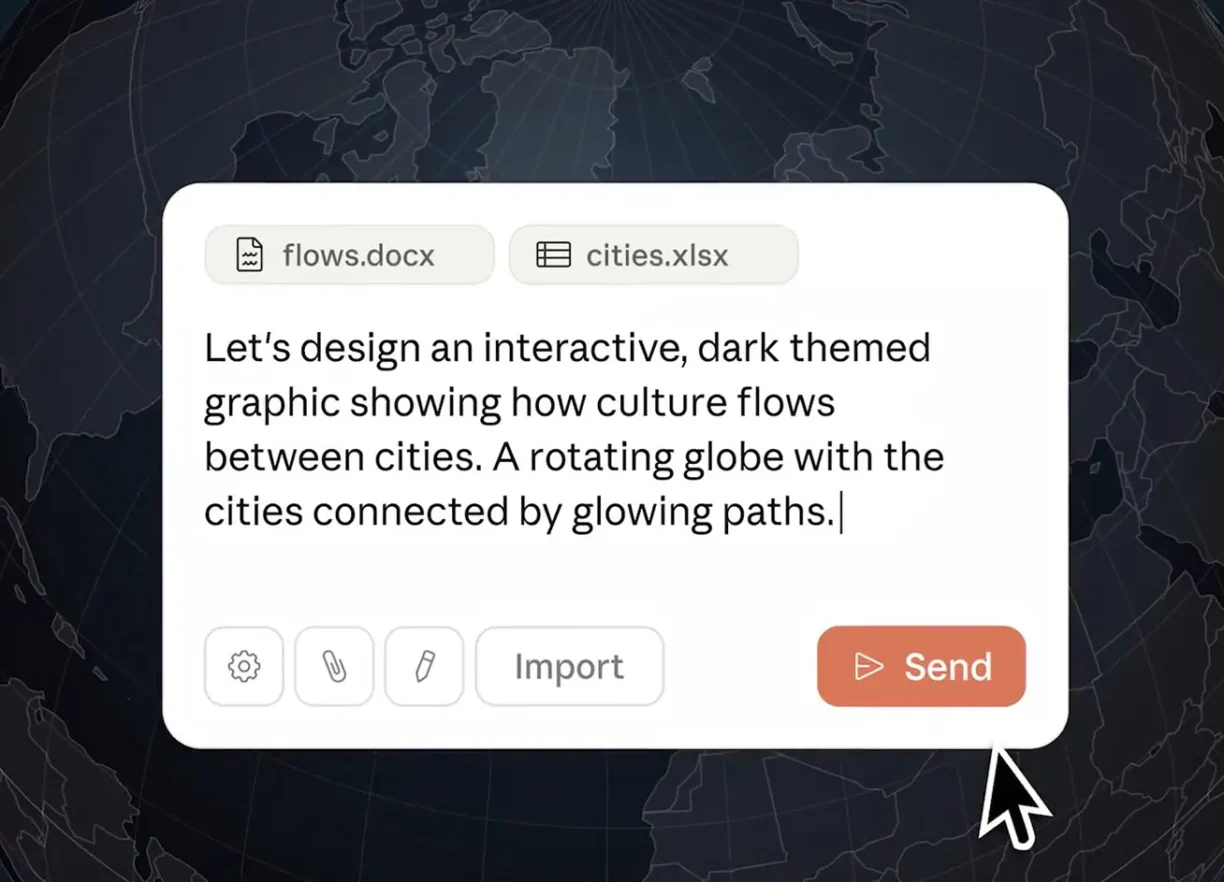
1. Describe the idea
You start with a simple prompt. You describe the goal, content, and style.
For example:
“Create a modern website for a dentist with a focus on trust and appointment booking.”
2. Create the first version
The AI then generates a complete design. This includes layout, structure, and content.
3. Give feedback
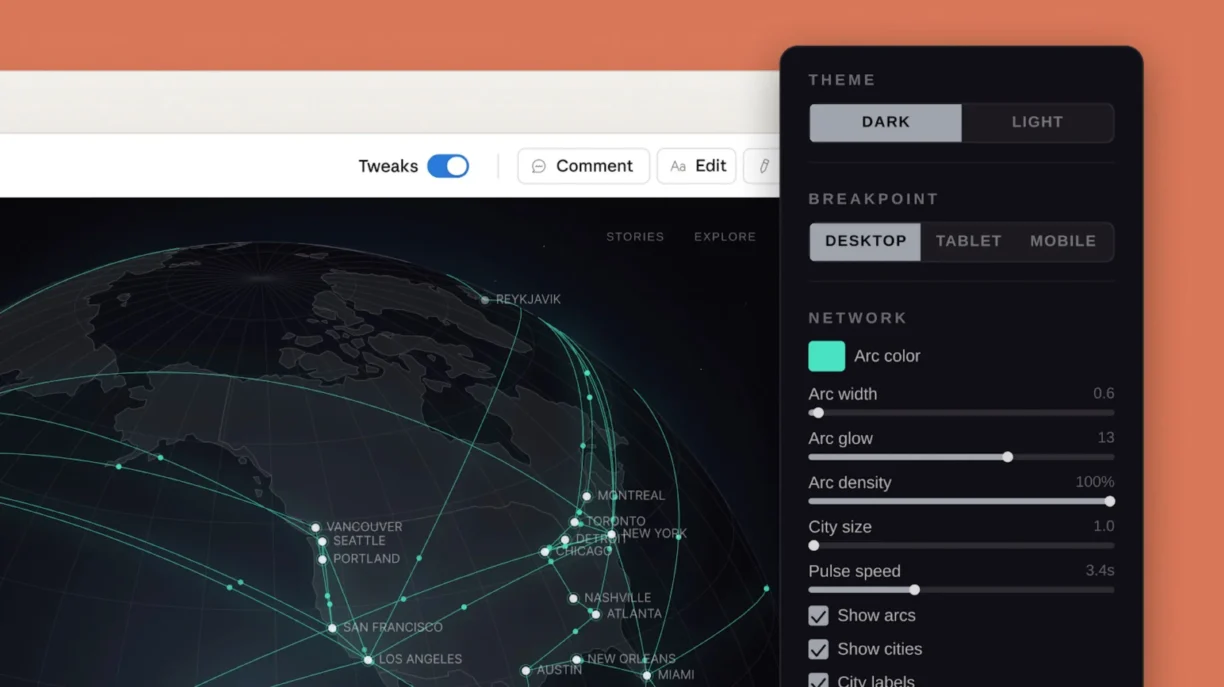
Then you adapt the design. You comment on elements, change texts, or adjust colors.
4. Apply the design system
Claude can automatically adopt your brand guidelines. This keeps your entire design consistent.
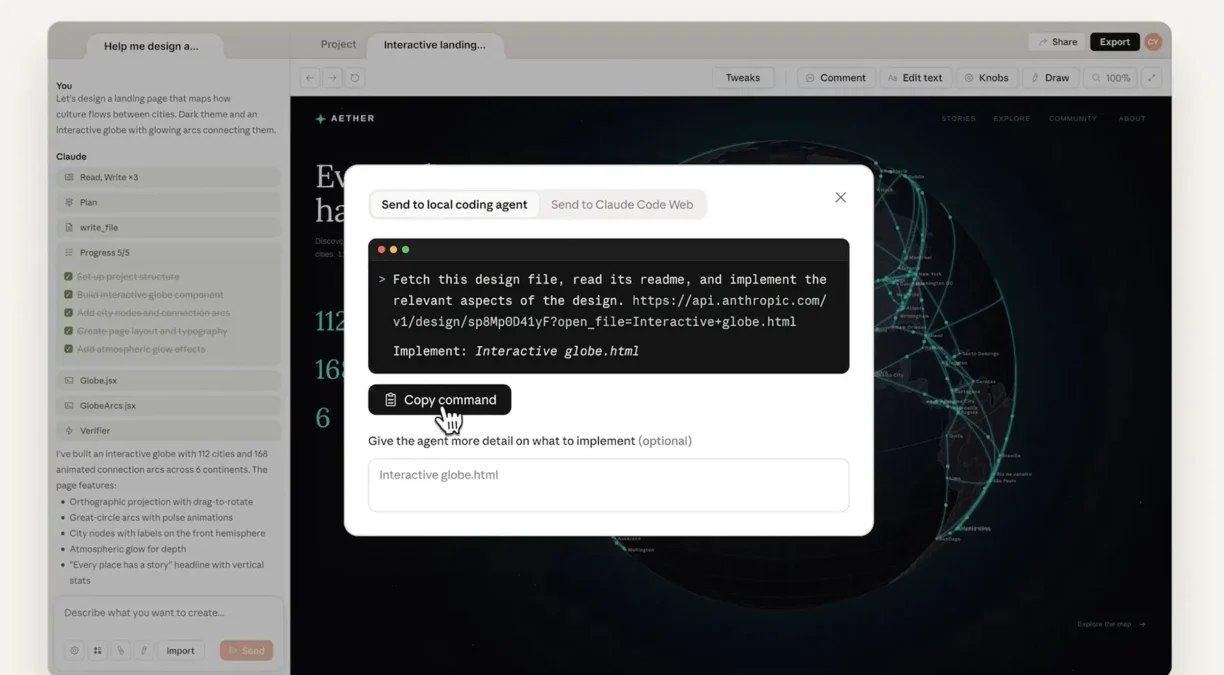
5. Export and Implementation
You export the result as:
• HTML
• PDF
• PPTX
• Canva file
Alternatively, you pass the project directly to developers.
Typical use cases
Claude Design is suitable for many use cases in marketing and in product development.
Websites for local businesses
You quickly create websites for industries such as:
• Doctors
• craftsmen
• lawyers
• service providers
These pages serve as a foundation for SEO and lead generation.
Landing pages for campaigns
You develop targeted pages for ads and funnels. At the same time, you test different variants.
Prototypes and wireframes
You visualize ideas quickly and gather feedback before you develop.
Presentations and Pitch Decks
You turn rough ideas into finished presentations.
Practical Tips: How to Use Claude Design Effectively
To fully leverage the potential, you need a clear approach.
Step 1: Define your goal
You define what the design should achieve. This can be lead generation, sales, or information.
Step 2: Structure the prompt
A good prompt includes:
• target audience
• purpose
• style
• content
Step 3: Test variations
You create multiple versions and compare them
Step 4: Fine-tuning
You optimize details such as:
• colors
• spacing
• text
Step 5: Integration
You transfer the design into your existing systems.
Overview of Key Features
Opportunities and Risks of Claude Design
Claude Design offers enormous potential, but it also comes with challenges. A major advantage lies in its speed. You develop ideas faster and test more variants. As a result, you measurably improve your results. You also reduce costs because less manual work is required. At the same time, non-designers gain access to professional designs.
However, risks also arise. The quality depends heavily on your prompts. Without clear instructions, results can be vague or unsuitable. That is why you need to learn how to formulate precisely. In addition, the tool does not replace a strategy. You still need clear goals, an understanding of your target audience, and marketing expertise.
Another risk lies in standardization. If many companies use similar tools, designs can appear interchangeable. That is why you should deliberately incorporate individuality.
Mini FAQ
What does Claude Design cost?
The usage depends on the selected subscription model and varies depending on scope.
Can I create complete websites with it?
Yes, you can create complete designs and prototypes and then export them.
Do I need design skills?
No, but a basic understanding significantly improves your results.
Is the tool suitable for companies?
Yes, especially for marketing, product development, and rapid prototypes.
Future and Development
The development of AI design tools is still at an early stage. Nevertheless, a clear direction is already emerging: design is becoming increasingly automated. At the same time, the focus is shifting from execution to strategy. In the future, you will spend less time on tools. Instead, you will focus more on:
- Ideas
- Concepts
- User understanding
In addition, systems are becoming more closely integrated. Artificial intelligence connects design, development, and marketing into a continuous process. Another trend is personalization. Designs automatically adapt to target audiences and optimize themselves. For you, this means: you should learn early to work with such tools. This will secure long-term competitive advantages.
Conclusion
Claude Design fundamentally changes design processes. You work faster, more flexibly, and more efficiently.
At the same time, the tool opens up new possibilities in marketing and in product development. You test ideas faster and optimize your results more precisely.
However, the strategy remains crucial. Without clear goals and proper execution, you will not achieve sustainable results.
If you use Claude Design correctly, you combine speed with quality. This exact combination will determine your success in the digital competition in the future.
FAQ
Our blog
Latest news
With our blog, you are always close to our work, our current projects and the latest trends and developments in web and print.


Any questions?