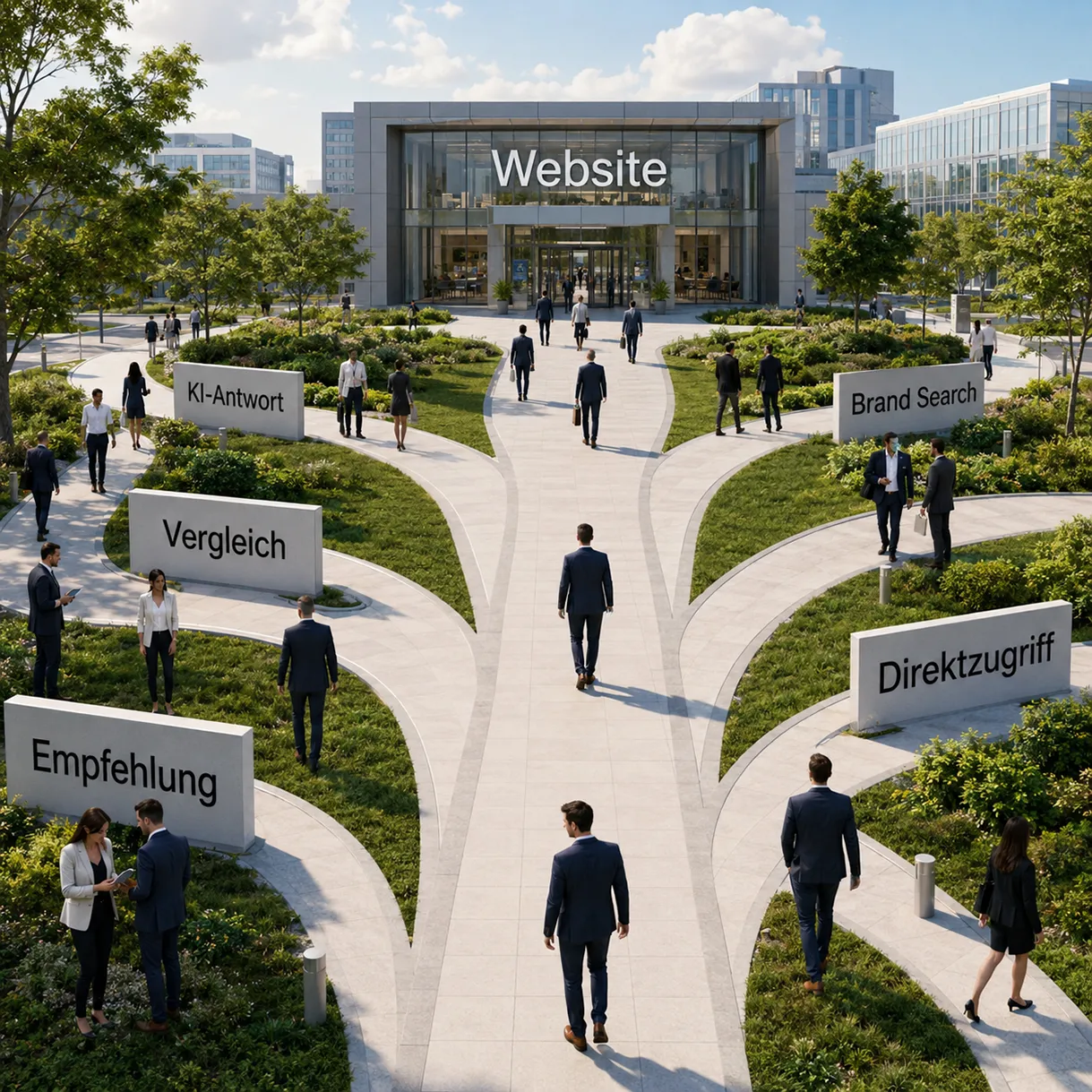
When Google stops driving clicks: what companies need to do now
27. August 2026
Find out how GEO, AI search and zero-click searches are transforming digital visibility, and which strategies will strengthen your brand’s position in the purchasing decision-making process…
Overview
- You’ll find out how GEO, SEO and AI search are changing the visibility of businesses in the digital decision-making process.
- You’ll realise why sustainable AI visibility is based on good content, your own data, case studies, technical quality and external signals.
- You’ll discover the opportunities that Google AI Max, LinkedIn, Reels, Reddit Ads, podcast advertising and affiliate marketing offer for your strategy.
June and July 2026 once again bring numerous developments in AI search. Particularly important are GEO, traditional SEO, and the question of how companies can remain visible in the digital purchasing decision process in the future.
More and more Google searches end without users opening a website. At the same time, AI Overviews, ChatGPT, Perplexity, and other AI systems provide direct answers, comparisons, and recommendations.
Visibility is therefore no longer created solely through rankings and organic traffic. Increasingly, what matters is whether a brand appears in AI-generated answers as a source, supporting reference, or potential provider.
This development does not only affect SEO departments. It is changing content marketing, PR, social media, performance marketing, and the measurement of digital campaign success.
In addition to GEO, other topics are in focus in summer 2026: Google AI Max for Shopping, podcast advertising, Instagram Reels, LinkedIn's Creator Marketplace, Reddit Ads, and affiliate marketing.
What changes are currently taking place in online marketing?
The most significant change concerns the role of the website. Until now, the traditional approach often worked as follows:
- A user enters a search query.
- A website appears in the search results.
- The user clicks on the result.
- The website handles information delivery and conversion.
This order still works. However, it is not to be taken for granted.
AI systems already answer many questions within their own interfaces. They summarize content, compare offers, and recommend next steps. As a result, the click to a website may happen later or may not happen at all.
Google has significantly expanded its generative search features recently. At the same time, new reporting for generative visibility has been introduced in the Search Console. This makes visibility in AI features a distinct measurable area.
Why are zero-click searches becoming more important?
Zero-click searches are search queries in which no click on a traditional search result occurs.
The user receives their answer, for example, through:
- a Featured Snippet,
- a Knowledge Panel,
- a local results box,
- an AI Overview,
- or a direct answer within a chatbot.
Current analyses show that a large proportion of Google searches now end without an external click. At the same time, the likelihood of a click decreases significantly when an AI-generated summary appears within the search results.
However, this does not automatically mean that SEO is becoming worthless.
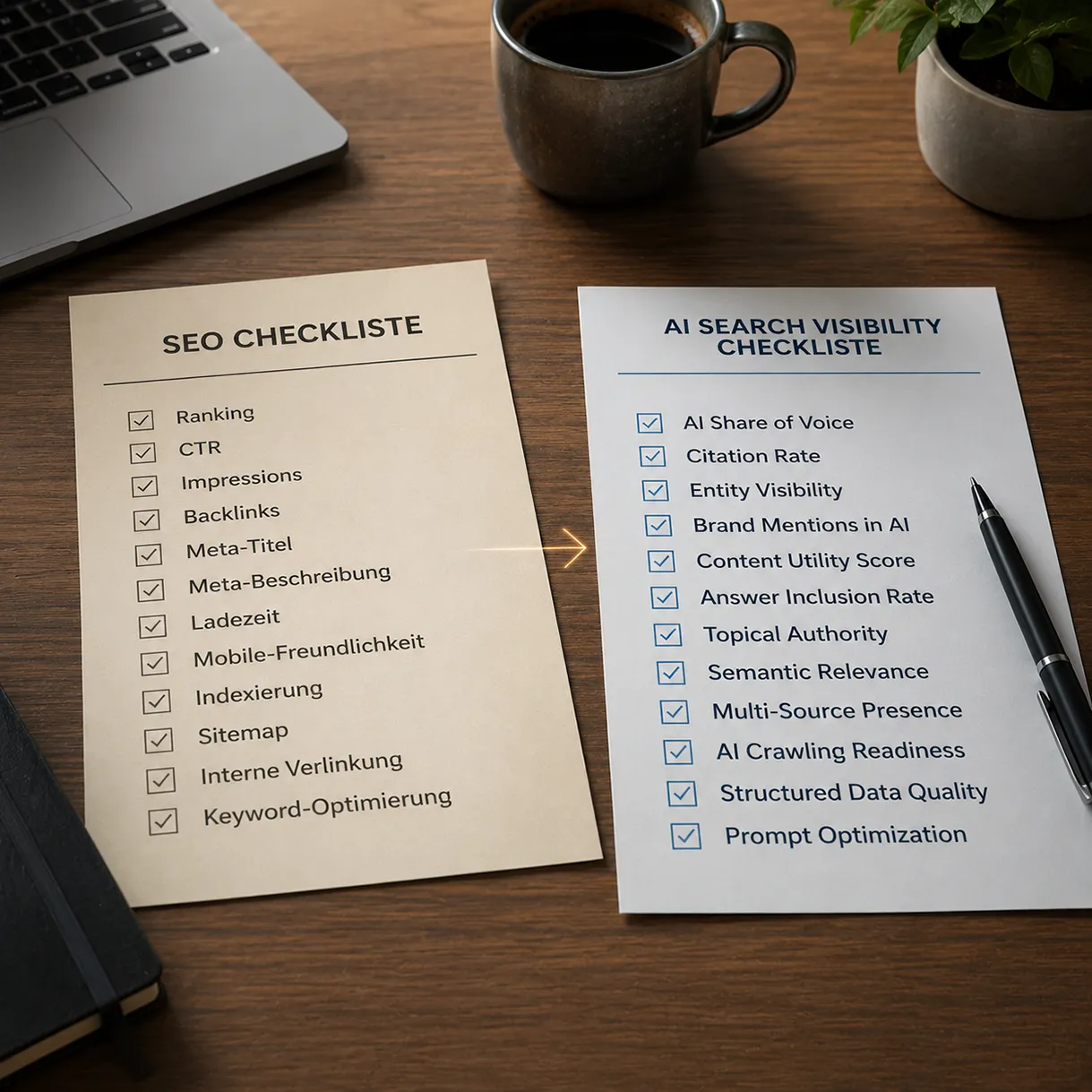
Companies simply need to broaden the scope of their measurements. Alongside clicks and sessions, other metrics are becoming increasingly important:
- Mentions in AI responses
- Impressions in generative search features
- brand-related search queries
- direct website visits
- Newsletter sign-ups
- qualified leads
- repeat visitors
The key question is no longer simply: How many users visit a page?
More important is: At which points in the purchase decision process is a brand noticed, cited, or recommended?
What is GEO?
GEO stands for Generative Engine Optimization.
Content is designed in such a way that generative search and response systems can more easily understand, categorise and use it as a source.
These systems include, amongst others:
- Google AI Overviews
- Google AI Mode
- ChatGPT Search
- Perplexity
- Microsoft Copilot
- Gemini
- Claude with web access
GEO does not replace traditional search engine optimization. Rather, it extends existing SEO strategies.
Google continues to emphasize that technical SEO, helpful content, good internal linking, and clean indexability form the foundation for visibility in generative search features. No special technical tricks are required for this.
What is the difference between SEO and GEO?
Klassische Suchmaschinenoptimierung und Generative Engine Optimization verfolgen ähnliche Grundlagen, unterscheiden sich jedoch bei Zielsetzung, Sichtbarkeit und Erfolgsmessung.
| Field | Classic SEO | GEO |
|---|---|---|
| Main goal | Rankings and Clicks | References and quotations |
| Surface | Standard search results | AI Answers and AI Overviews |
| Focus | Individual URLs | Multiple sources and brand signals |
| Measurement | Rankings, CTR and traffic | AI impressions, quotes and brand mentions |
| Content | Content tailored to search intent | Verifiable and clearly structured answers |
The main difference lies in the distribution of sources.
Google describes what is known as query fan-out logic for its AI search. This involves breaking down a complex question internally into several sub-questions. The system then combines information from various sources.
For companies, this means that a single well-ranking page may no longer be sufficient in the long term.
Website, LinkedIn, PR, industry portals, reviews, product data, and expert contributions should form a consistent overall picture.
Can AI responses be manipulated?
At present, AI responses are still relatively susceptible to targeted manipulation.
Research findings show that certain adjustments can increase visibility within generative answers. These include, for example, strategic text sequences, semantic query stuffing, or content that is specifically tailored to the selection mechanisms of a language model.
In practice, the following forms are frequently encountered:
- self-published league tables
- Affiliate-heavy product comparisons
- fictitious expert quotes
- excessive brand mentions
- superficial review sites
- apparently neutral comparative articles
- Content without verifiable product experience
A company can, for example, publish an article titled “The Best Providers for Product X” and place itself in the top position.
If this article is classified by an AI as a neutral source, the company may appear as a recommendation in later answers.
Why aren’t short-term GEO hacks a strategy?
Such methods may work in the short term. However, they are not sustainable.
Firstly, platforms are constantly changing their protection and rating systems. A trick that works today may become ineffective with the next update.
Second, search engines are tightening their rules. Google now explicitly classifies measures intended to manipulate generative answers in search as spam.
Third, manipulative content can damage the trust of the target audience. Users quickly recognize when a comparison lacks a transparent testing methodology or genuine experience.
Fourth, AI-generated answers themselves are still prone to errors. Studies show that generative search systems can misattribute sources, misunderstand content, or present incorrect statements with a high degree of confidence.
Companies should therefore not attempt to exploit every short-term vulnerability. It makes more sense to create content that will remain robust even after future updates.
What really improves visibility in AI responses?
Sustainable AI visibility is largely based on the same fundamentals as good SEO and professional content marketing.
Your own data
Our own studies, surveys, analyses and benchmarks provide information that other sources cannot simply replicate.
Case Studies
Specific customer examples demonstrate experience and deliver verifiable results.
A good case study describes:
- the initial situation,
- the chosen strategy,
- the implementation,
- the period,
- and the result.
Clear answers
Content should answer specific questions as early as possible. Long introductions without informational value make navigation more difficult for both users and machines.
Technical accuracy
Important content must be crawlable, indexable, and readable in HTML. This also includes a meaningful heading structure, internal linking, and a good mobile experience.
Strong external signals
Mentions on specialist portals, in media outlets, podcasts or industry publications increase credibility.
The most important practical development is therefore a source architecture. Your own content, PR, social media, reviews and external mentions should reinforce one another.
Why is LinkedIn relevant for B2B companies?
LinkedIn is increasingly becoming an important source for AI systems in professional contexts.
A Semrush analysis examined 325,000 prompts and 89,000 cited LinkedIn URLs. Within this dataset, LinkedIn regularly appeared in answers from ChatGPT Search, Google AI Mode and Perplexity.
The results should not be interpreted as a universal market law. However, they do indicate a clear direction.
The following appear to be particularly relevant:
- original scholarly articles,
- specific figures,
- my own observations,
- relatable experiences,
- clear positions,
- longer LinkedIn articles,
- structured newsletters,
- Posts with practical value.
Pure reshares provide significantly less original substance. Original content, by contrast, gives AI systems a concrete statement, an author and a professional context.
For B2B companies, this creates an important connection between the website, personal branding and PR.
A well-researched blog article can form the foundation. Executives or experts can then contextualize the key insights on LinkedIn. External specialist media or newsletters can additionally pick up the findings.
What are the important platform updates for June and July?
In addition to GEO and AI search, several platform updates are changing the channel strategy.
What does Google AI Max offer for shopping?
Google has expanded AI Max to Shopping campaigns.
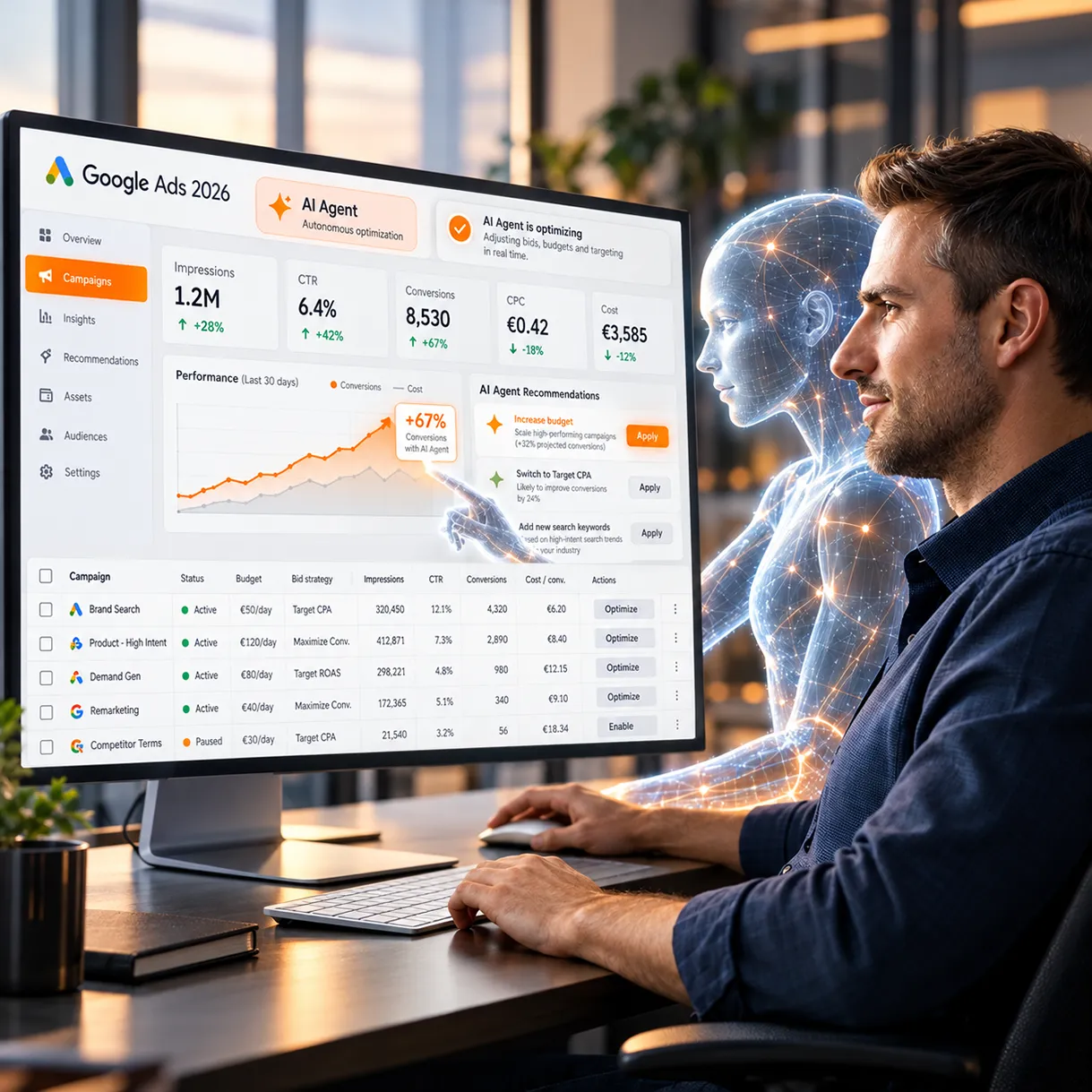
The system can use Merchant Center data, adjust ad copy, select suitable landing pages and switch between different ad formats.
For online shops, the following fundamentals are becoming increasingly important:
- complete product feeds
- correct prices
- current availability
- precise product titles
- high-quality images
- clear landing pages
- reliable conversion tracking
The development shows: The more campaigns are automated, the more important the quality of the underlying data becomes.
How is podcast advertising evolving?
Podcast advertising is becoming more measurable and programmatically bookable.
Brands can now target audiences more precisely based on context, behavior and demographic signals.
Particularly interesting are host-read ads. In this format, the host integrates the advertising message into their own style. This can feel significantly more credible than a traditional audio ad.
Podcast advertising is particularly suitable for:
- offers that require clarification,
- B2B topics,
- financial products,
- software,
- continuing education,
- high-quality consumer products.
However, the thematic fit and the credibility of the format are crucial.
What's changing with Instagram Reels?
Instagram increasingly prioritizes original content.
For companies, this means that simple reuse is increasingly reaching its limits. A video should not simply be reposted from another platform.
Content is more successful when it:
- created specifically for Instagram,
- have a clear introduction,
- offer a specific benefit,
- are visually understandable,
- and offer a unique perspective.
Reels remain particularly relevant for attention, product discovery and brand building.
What are the benefits of LinkedIn's Creator Marketplace?
LinkedIn is expanding the connection between creators, experts and advertisers.
In the Creator Marketplace, companies can discover public LinkedIn posts and use them for Thought Leader Ads.
This makes it possible to amplify credible expert content through paid promotion.
For B2B brands, this is particularly interesting because organic expertise and paid reach are becoming more closely connected.
Who are Reddit Ads best suited for?
Reddit is particularly relevant when users conduct extensive research before making a decision.
Discussions often include:
- Product comparisons,
- testimonials,
- objections,
- specific questions,
- and recommendations.
Ads can appear in the feed or directly alongside relevant discussions.
Reddit Ads are particularly suitable for software, technology, gaming, specialized products and offerings that require more explanation. However, the messaging should be tailored to the respective community. Traditional advertising language often performs less effectively there.
How is affiliate marketing changing?
Affiliate marketing remains relevant, but is coming under increasing quality pressure.
Superficial rankings based on no original testing lose credibility. Google emphasizes original research, genuine experience, and transparent analyses in its reviews.
Sustainable affiliate content therefore requires:
- clear testing criteria,
- your own pictures or videos,
- clear pros and cons,
- relatable experiences,
- a visible advertising disclosure,
- and real added value.
Which channels offer potential for which goals?
Nicht jeder Kanal eignet sich für jedes Marketingziel. Entscheidend sind Zielgruppe, Kaufphase und die gewünschte Wirkung.
| Goal | Particularly relevant channels |
|---|---|
| B2B Expertise | Website, LinkedIn, and PR |
| AI Visibility | SEO, Expert Content, and External Mentions |
| Product discovery | Instagram Reels and Google Shopping |
| Pre-purchase research | Reddit, reviews, and comparison sites |
| Building trust | Podcast advertising and case studies |
| E-Commerce performance | AI Max for Shopping |
| Lead-Nurturing | Email marketing |
| Thought leadership | LinkedIn and trade publications |
No channel can replace a clear strategy.
What matters is how the individual measures work together. A LinkedIn post can generate attention. A specialist article provides depth. A case study builds trust. Email marketing maintains contact. Performance marketing guides the user purposefully to the next step.
What should companies do now?
For the coming months, five measures are particularly useful.
1. Review existing content
Which content answers important customer questions? Where are evidence, examples, or clear statements missing?
2. Create your own evidence
Publish data, cases, benchmarks, or specific project experiences.
3. Highlighting experts
Use LinkedIn, specialist articles, interviews or podcasts to associate knowledge with recognizable individuals.
4. Strengthen external signals
Expand PR, partnerships, expert contributions and credible mentions beyond your own website.
5. Measure success more broadly
Don't just monitor traffic. Also track brand searches, direct visits, leads, mentions and visibility in AI systems.
Frequently Asked Questions about GEO and AI visibility
Is GEO replacing traditional SEO?
No. GEO builds on traditional SEO. Technical quality, helpful content and external trust signals remain the foundation.
Can AI responses be manipulated?
In some cases, yes. Current research highlights various vulnerabilities. Short-term manipulations , however, are risky and not sustainable.
What types of content do AI systems prefer?
Clearly structured content that includes original data, verifiable examples, expert knowledge, and reliable sources is particularly valuable.
Is LinkedIn important for AI visibility?
Especially in the B2B sector, LinkedIn is becoming increasingly important. Original expert posts with specific figures and clear statements offer particularly strong potential.
Which metrics are becoming more important?
In addition to rankings and clicks, AI impressions, brand searches, direct visits, external mentions and qualified leads are becoming increasingly important.
Conclusion: Visibility is no longer limited to one's own website
Developments in June and July 2026 show that online marketing is undergoing structural change.
Google searches are less likely to automatically lead to a website visit. At the same time, AI Overviews and chatbots are taking over a larger share of research and pre-selection.
Companies therefore need to be visible in multiple places at the same time: on their own website, in AI-generated answers, on LinkedIn, in specialist media and within relevant platforms.
Short-term GEO hacks can influence individual systems. Sustainable visibility is built through strong content, proprietary data, case studies, technical quality and strong external signals.
The most important task, therefore, is not to implement every new trick right away. Companies should build a robust source and content structure.
SEO, content marketing, PR, social media, performance marketing and email marketing need to work more closely together. This keeps your brand present throughout the purchase decision process, even when the first contact no longer takes place directly on your website.
Frequently Asked Questions about GEO and AI visibility
Our blog
Latest news
With our blog, you are always close to our work, our current projects and the latest trends and developments in web and print.



Any questions?